Where the Taste Comes From
How We Build
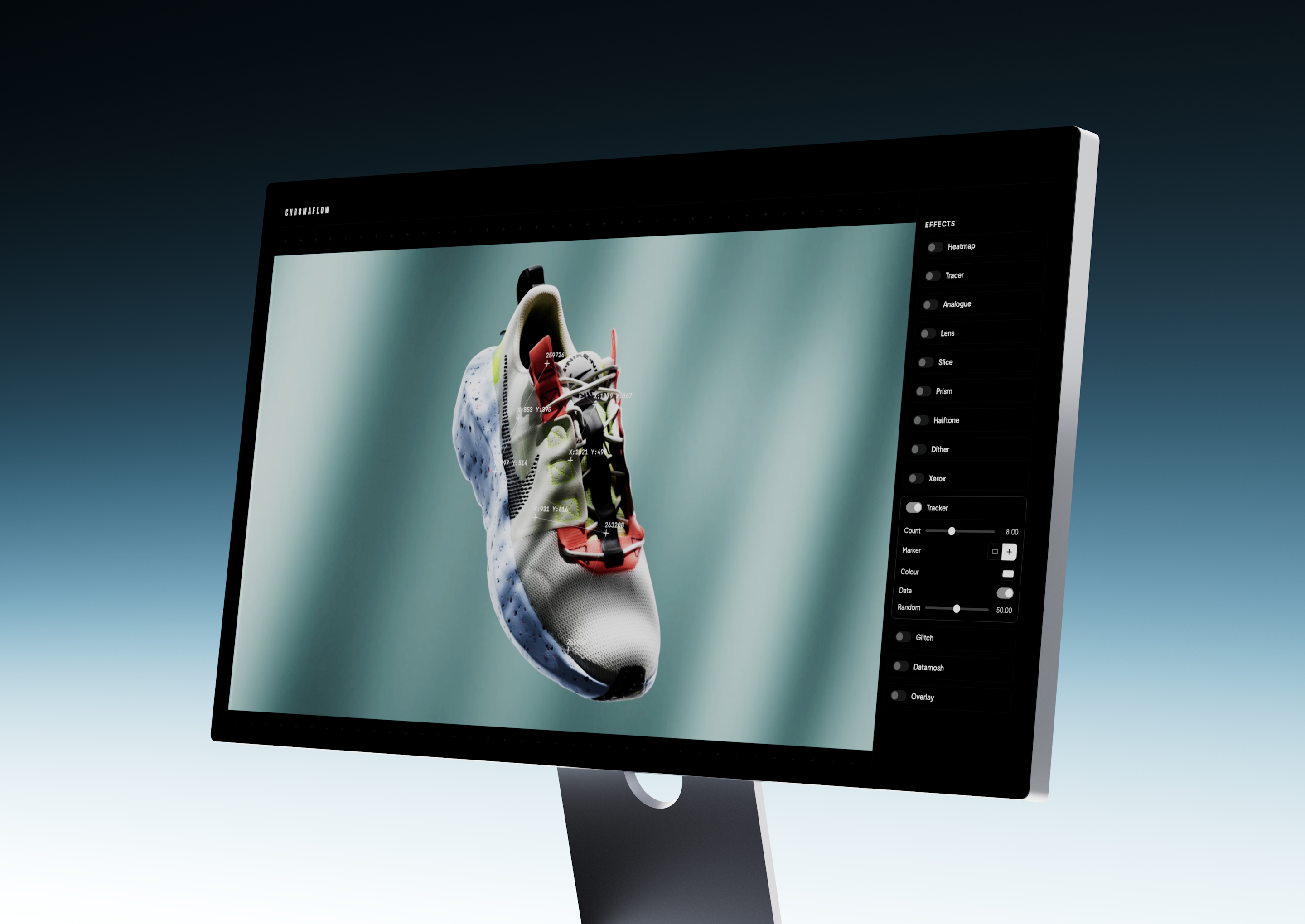
Mark Dearman is an independent 3D and motion designer who works with Fantasy. He wanted a faster way to experiment with shader effects on footage, so he built Chromaflow with Claude.
Why build a real-time shader tool for video?
Every time Mark changed an effect in the tools he used every day, he had to wait for a render before he could see whether it worked.
“I wanted to play. A lot of the fun in finding a look is the back-and-forth: nudge a parameter, see what happens, try something else. After Effects is brilliant for finishing shots, but it isn’t built for that kind of real-time experimenting. Once you start stacking effects, previews slow down and you end up waiting on renders instead of reacting to what you’re seeing.
“Shaders were the other part. They’re perfect for this kind of work because they run on the GPU and respond instantly, but there’s no native way to use them in After Effects, so you’re always going through plugins or extra setup before you can start exploring.
“So I wanted something closer to a sketchbook: drop in a clip, layer up GPU effects, tweak them while the footage plays in real time, and export an MP4 I can take back into a proper comp. Because it runs in the browser, there’s nothing to install, so you can just open it and start.
“I also didn’t want it to be a fixed toolkit. I built it so I can keep adding new shaders as ideas come up, so the platform grows alongside the creative exploration. Every new effect opens up new combinations with the ones already there, so it should keep getting more interesting over time.”
How did one shader become a full tool?
It began as a single shader for a single project.
“It started much smaller than it is now: a single shader. I was working on a project that needed a particular effect, and rather than go hunting for a plugin, I wondered whether I could just build it myself with Claude.
“Once that first shader was working, I decided to keep building on it. I added more effects, then an interface to control them, then a way to export, and step by step it became a full tool.”
How do you explain a visual problem to Claude?
He used the same language he’d use with a technical director, and Claude turned it into shader math.
“The first ask was simple, basically ‘here’s the look I want, can we make this as a shader?’ What surprised me was how intuitive the process was. I could describe what I was seeing in art director terms, like ‘the distortion needs to be removed at the centre’ or ‘the colour’s getting too neon,’ and Claude would translate that into the technical changes. It felt like working with my own personal technical director.”
Why does Chromaflow have no timeline or keyframes?
Because Chromaflow does one job, and After Effects already handles animation.
“Chromaflow is a shader effects tool. The movement comes from the footage itself. You bring a clip that’s already moving, and the effects respond to it in real time. That’s what makes it approachable for people who don’t do motion. There’s no animating to learn, just a clip and some sliders.
“From the start my rule was to keep it simple and do one thing really well, rather than several things averagely. So there’s no timeline and no keyframes. After Effects already handles animation brilliantly, and there’s no point rebuilding that. What After Effects doesn’t do well is play back stacked effects in real time, and that’s exactly what Chromaflow is built for. Everything runs on the GPU, so you can tweak a parameter and see the result instantly, while the footage plays.
“Every feature I didn’t add keeps the focus on the part that matters: exploring how an effect looks and feels on real footage and CG renders.”
Why run it in the browser?
For work under NDA, where the footage gets processed decides whether a studio can use a tool at all.
“Your footage never leaves your machine. There’s no server, no account. The video is decoded, run through the effects on your graphics card, and encoded back into an MP4, all locally.
“For anyone working on client material, that’s a big deal. A lot of what we work on is under NDA, and you can’t always drop it into an online tool. With Chromaflow there’s nothing to trust, because nothing travels.”
Why build your own tool instead of using what’s out there?
Mark wanted effects he couldn’t get from a preset.
“Because the best ideas often sit just outside what off-the-shelf tools can do. If I’m only working with the presets everyone else has, the work starts to look like everyone else’s.
“Building Chromaflow meant that when I had an idea for an effect, I could make it exist rather than settle for the nearest available option. If the tool doesn’t do what the idea needs, find a way to make it.”
When Mark shared Chromaflow with the Fantasy team on Slack in July 2026, he pitched it as “an easy way to stylise old shots, poor quality or stock footage for presentations, social assets etc.” Firdosh Tangri, Fantasy’s CEO, used it for his AI Dispatch video, and Mark has used it on a Nike video.
AI made the building faster. The taste still has to come from somewhere.Mark Dearman, 3D and Motion Designer
What has working with Claude changed for Mark?
“It’s changed who can build what. I’m an art director and designer, not a graphics programmer, but working with Claude felt like having a technical director alongside me. What it hasn’t changed is where the judgment comes from. Claude can write a shader, but deciding whether it looks right, whether it feels right in motion, and whether it serves the idea is still the creative work. AI made the building faster. The taste still has to come from somewhere.”
So who did what?
Claude wrote the shader code and turned Mark’s notes on what he saw into the changes that fixed it. Mark decided which effects were worth making in the first place, and whether each result looked right on real footage. Between them, Mark and Claude grew one effect for one project into a browser tool that layers more than a dozen GPU effects over footage as it plays and exports an MP4 ready for a proper comp.
How to build a real-time video effects tool with Claude
Mark’s first version was a single shader for a look one project called for. Get one effect working on real footage before you add an interface or a second effect.
Describe what you see on screen in your own craft language (one of Mark’s notes was “the distortion needs to be removed at the centre”), and Claude translates it into the technical changes.
Chromaflow skips animation because After Effects already handles it. Build for the gap your finishing software leaves, and let your finishing software handle the rest.
GPU shaders respond instantly, so you can change a parameter while the footage plays. A browser tool needs no install, and your footage stays on your own machine.
Chromaflow exports an MP4 that goes straight back into an After Effects comp, so plan that handoff from the start.
Build the tool so new shaders slot in as ideas come up. Each new one adds combinations with the effects already there.
Frequently asked questions
Chromaflow is a browser-based video effects tool built by 3D and motion designer Mark Dearman with Claude. You drop in a clip, stack GPU shader effects such as halftone, dither, glitch, and datamosh, adjust them while the footage plays, and export an MP4. It’s live at chromaflow.co.uk.
Yes. Mark built Chromaflow’s shaders by describing the look he wanted in art director terms, such as “the colour’s getting too neon,” and Claude made the technical changes. Deciding whether each result looked right stayed with him.
After Effects doesn’t run custom shaders natively. It usually takes a third-party plugin or extra setup, which is why Mark built Chromaflow to run them in the browser and export an MP4 he can bring back into an After Effects comp.
No. Chromaflow has no server and no account. It decodes the video, runs it through the effects on your graphics card, and encodes it back into an MP4 on your own computer, so footage under NDA never leaves the machine.
No. Chromaflow is a shader effects tool with no timeline or keyframes. The movement comes from the footage itself, and the effects respond to it in real time, which keeps it approachable for people who don’t do motion.